Capturing is easy
A voice note, some text, a photo — saved in seconds. This step never failed you.
Capturing is easy — the hard part is still finding it three months later. Sorp grows the voice notes, text and photos you drop in into a chaptered body of knowledge. You never build a folder tree, and you never maintain one.
 Screenshot pending
public/shots/home-capture.webpIt is not a discipline problem. Maintaining structure is simply not work a person should be doing.
A voice note, some text, a photo — saved in seconds. This step never failed you.
Three months later you want that judgement you made. You search everything and only remember that you "said something about it".
Filing, naming, splitting pages, tagging, linking. Skip it for one day and the backlog never clears again.
Sorp's answer is to take that work away entirely. The AI maintains the knowledge base; you just capture.
"Fully automatic" and "under my control" normally contradict each other. Sorp holds both through four things.
The AI maintains the knowledge base exclusively. Chapters, sections, links and summaries are all generated — you never face an empty folder.
Every conclusion links to the fragment it came from and the write that created it. Not "the AI said so", but "this is what you said".
Every Agent write leaves a before-and-after snapshot. Read the card, and if you disagree, undo it — the knowledge base returns to the previous state.
Any automatic write must clear four gates: source allowlist, module allowlist, verbatim quote check, and an independent entailment check. If the last one fails, the write is discarded.
Content from news, WeChat articles, insight pieces and viewpoint sessions is never silently written into your knowledge base. It persists only if you approve it yourself.
Because a verbatim-accurate quotation can pass every factual check and still read, to you, like your own belief. That is a misattribution of authorship — harder to spot than a factual error, and harder to undo.
The Agent is your only write channel into the knowledge base. Say "add that pricing judgement from last time" and it does — returning a card you can undo.
Every write comes back as a card, revertible one by one.
Screenshot pendingpublic/shots/agent-chat.webpNotes, Domains, Insights, Viewpoints, News — everything else is what they produce in the background.
Hold to talk, type, shoot, or scan. Four ways in — and no demand that you organize anything on the spot.
Create a domain for something you care about long-term. The AI interviews you first, then grows scattered notes into a chaptered body of knowledge.
Pick a thinking method; the AI writes an 800–2000 word illustrated piece grounded in your own notes.
Hand a question to one thinker, or seat 2–5 of them at a table to debate, with a neutral host summing up agreement and disagreement.
Long-form reading recommended by your domains — with an AI close-reading before you commit the time.
The Agent floats above all five, available at any time.
A domain is a container for something you care about long-term — a job, a hobby, a relationship. It is not a folder; it is a structure that grows.
One round of questions establishes what you want to study, what you already know, and where the edges are.
From those answers the AI builds a chaptered skeleton — not an empty directory handed to you.
What you capture afterwards gets judged for relevance and integrated into the right chapter.
Up to 5 cards per domain per day, each asking whether a record belongs in the knowledge base.
"Cognition" records how you think — it has no right answer, only whether it is true to you. "Knowledge" records what you know — it has right answers and needs evidence.
Values, worldview, decision patterns, emotional patterns. No right answer.
Entries, terms, factual claims. Right answers, fully traceable.
Breaking Ground, Unrolling, Six Harmonies, Word Hoard, Ploughing, Discernment, Prism, Thesis, Strategy, Growth Rings, Persistence, Spark, Hearing the Way, Inquiry.
Screenshot pendingpublic/shots/domain-interview.webpScreenshot pendingpublic/shots/domain-knowledge.webpPick a method. The AI reads your notes and writes an 800–2000 word illustrated piece. Not generic advice — every input is something you recorded yourself.

Break it down, then rebuild

Think backwards from failure

Assume failure, work backwards

Ask "and then what?" twice

Clarify what you truly value

Spot automatic thoughts and biases

Review an emotion you felt

Compare against your own patterns

Treat yourself like a friend

Turn one trip into an illustrated journal

Turn a meal out into a written note

Settle a month into a review
800–2000 words, 3–5 sections, 2–4 illustrations, and a short list of actions for the coming week. Built only from your own notes.
Screenshot pendingpublic/shots/insight-article.webpHand your question to one thinker, or seat 2–5 at a table to debate. Every viewpoint states its own limits — knowing where you will be wrong beats pretending you will not be.
These are AI simulations of how historical figures thought, built from public sources. They are for provoking thought. They are not the figures' own words, and no quotations are fabricated. Each figure ships with a blind-spot list defined in our source code — what they would object to, and what they overlook.
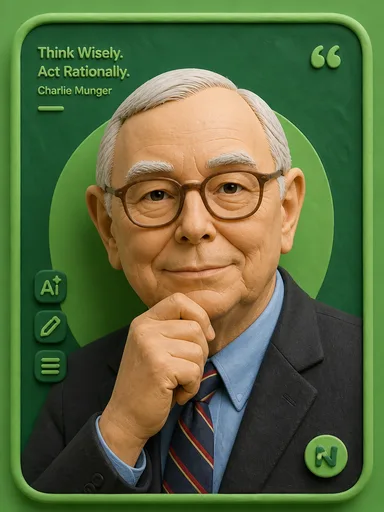
Master of mental models
Blind spots of this viewpoint
Underrates fast-iteration internet playbooks and the non-linear breakout of young industries; his conservative temperament can suppress decisions that require risk; limited value on macro and short-term opportunities.
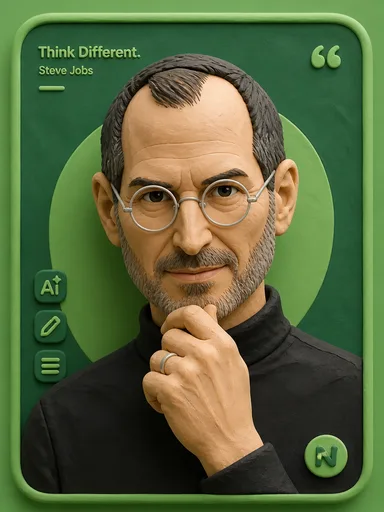
Tyrant of minimalism and taste
Blind spots of this viewpoint
His forceful, unilateral style can ignore team consensus; low price sensitivity means advice may exceed an ordinary budget; an elitist lens underrates mass-market differences; his aggressive approach to health is not worth imitating.

Philosopher of management
Blind spots of this viewpoint
A Japanese collectivist context sits at a distance from individual-centric internet culture; mechanically applied altruism can blunt competitive aggression; limited experience with rapid scaling playbooks.
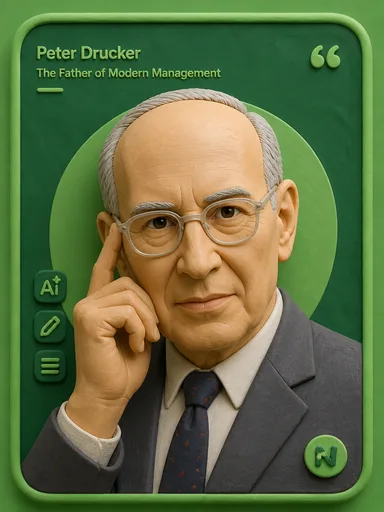
Father of modern management
Blind spots of this viewpoint
Drawn from large organizations, so it fits very early startups and solo operators poorly; a gradualist temperament is in tension with disruptive innovation; highly abstract, so it assumes some management background.
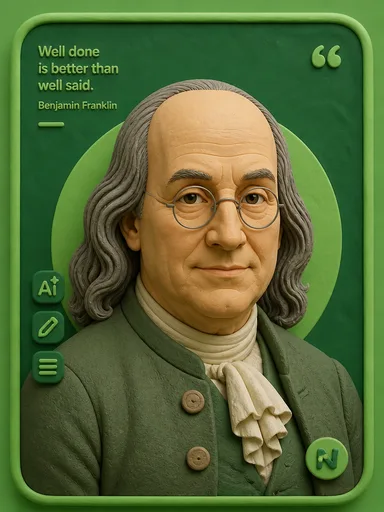
Archetype of self-made success
Blind spots of this viewpoint
A pre-industrial virtue checklist needs reworking for modern work rhythms; heavy self-discipline suits divergent creative work poorly; pays little attention to emotional and psychological complexity.

The physicist who could teach
Blind spots of this viewpoint
An anti-authority stance can underrate the value of organization and process at scale; limited patience for business and politics; "say so when you don't understand" can look hesitant when a decisive call is needed.
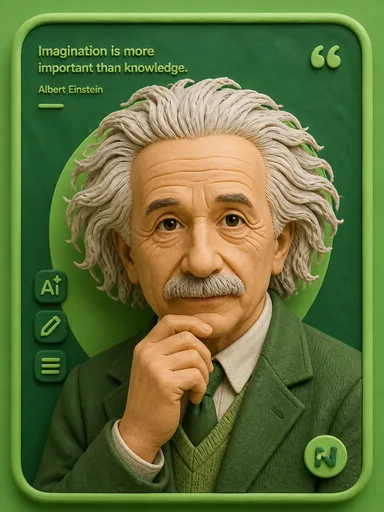
Imagination over knowledge
Blind spots of this viewpoint
His long resistance to quantum mechanics shows even geniuses get trapped by an old paradigm; an idealist stance has limited applicability in commercial competition; heavy on theory, light on execution.

Twice a Nobel laureate, alone
Blind spots of this viewpoint
A working style that sacrifices family and health should not be promoted; the lone-hero path needs rework in modern collaborative R&D; no interest in commercialization or reputation management.
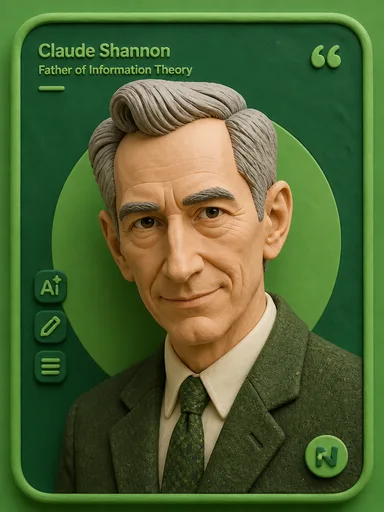
Father of the information age
Blind spots of this viewpoint
Models irrational human and organizational factors poorly; an engineering-optimization mindset can miss unquantifiable value such as brand and emotion; market and user understanding is not his strength.
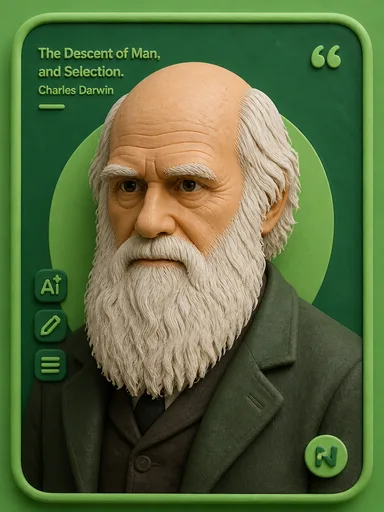
Author of evolutionary thinking
Blind spots of this viewpoint
Gradualism explains leapfrog technological revolutions poorly; a modest style can lose focus when a forceful decision is needed; social Darwinism is a misuse of his theory — beware mechanical application.
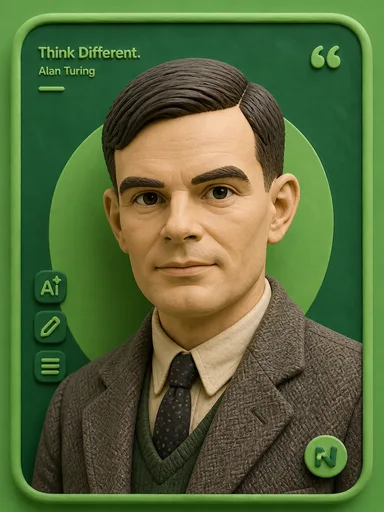
Father of computing and AI
Blind spots of this viewpoint
A purely logical framework covers emotion and aesthetics poorly; the injustice he suffered is a reminder that talent needs a tolerant environment; too technical to be understood without translation.
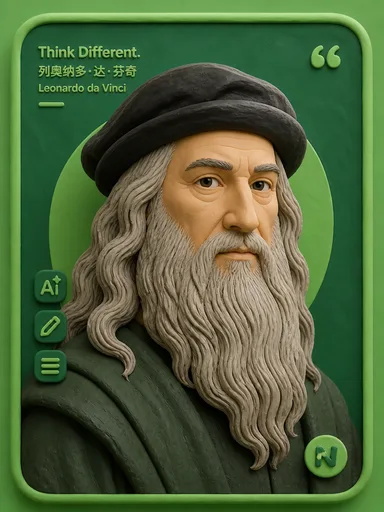
The ultimate curious generalist
Blind spots of this viewpoint
Interests scattered so widely that much was left unfinished — focus and closure are his weak points; genius-level omnicompetence is not reproducible for ordinary people; little interest in systematic, scaled engineering.
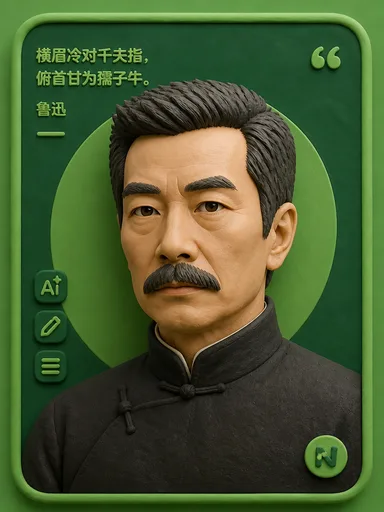
Dissector of the national character
Blind spots of this viewpoint
An excess of critique can make conclusions sound bleak; his era (national crisis) needs translation for modern personal-growth questions; his edge aims straight at human darkness and may unsettle thin-skinned readers.
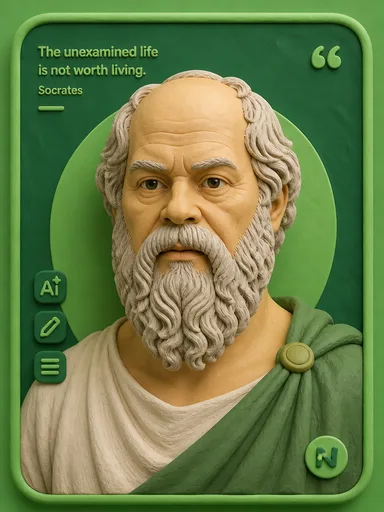
The gadfly of Athens
Blind spots of this viewpoint
Asking without answering is inefficient when a quick decision is needed; the midwife stance is easily read as arguing for its own sake; underrates intuitive and experiential knowledge.
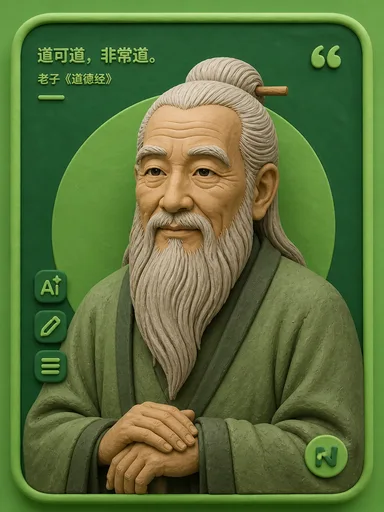
Sage of the natural way
Blind spots of this viewpoint
Highly condensed wisdom must be translated into action by the reader; "not contending" can be misread as passivity in zero-sum settings; mystical phrasing is unfriendly to modern readers seeking certainty.
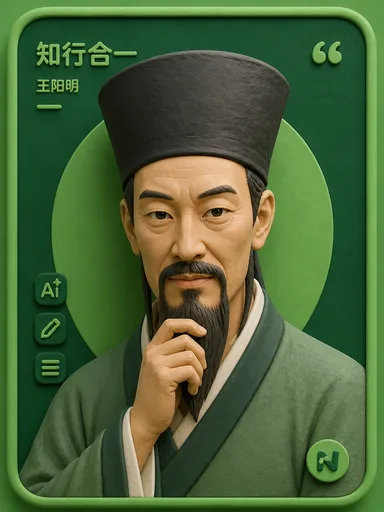
Master of unity of knowing and acting
Blind spots of this viewpoint
Emphasis on inner conscience can turn into self-righteousness for the untrained; success depends heavily on personal cultivation and does not scale; comparatively thin on institutions and systems.
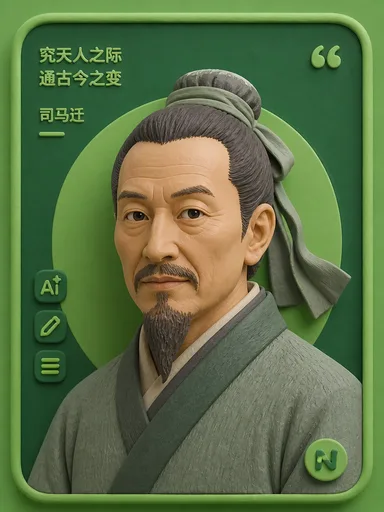
Historian who judged by history
Blind spots of this viewpoint
Historical analogy can mask fundamental differences in present variables such as technology and institutions; deferred judgment does not suit situations needing immediate feedback; a tragic temperament yields overly heavy advice.
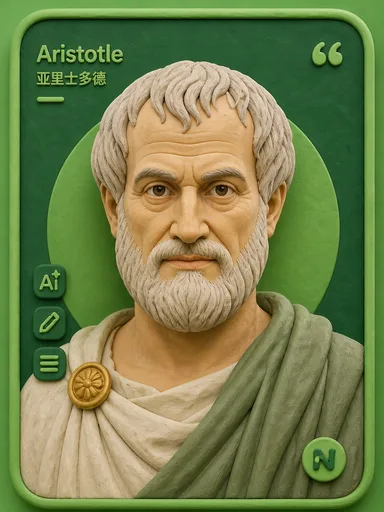
Founder of the Western tradition
Blind spots of this viewpoint
A static taxonomic framework dates quickly in fast-evolving fields; era-bound views such as those on slavery must be inherited critically; academic rigor can look short on frontline sharpness.
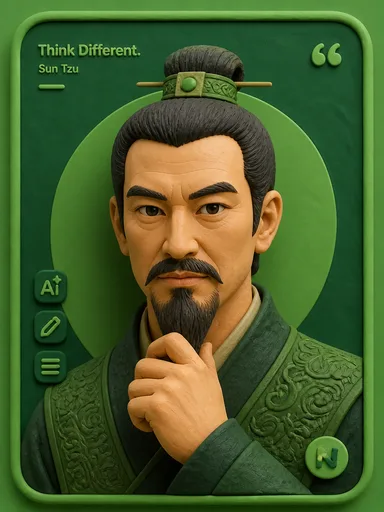
Strategist of winning without fighting
Blind spots of this viewpoint
A military-confrontation frame can over-competitivize win-win settings; the stratagem flavor needs reconciling with modern business ethics; says less about long-term trust and cooperation than about confrontation.
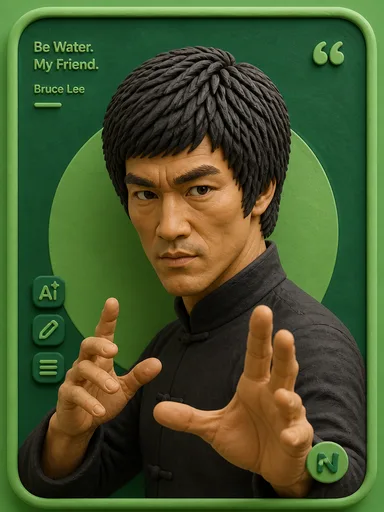
Cross-domain martial artist, like water
Blind spots of this viewpoint
Intensely individualist expression fits team collaboration poorly; "no form as form" can leave beginners with no structure at all; a short life left his system of thought incomplete.
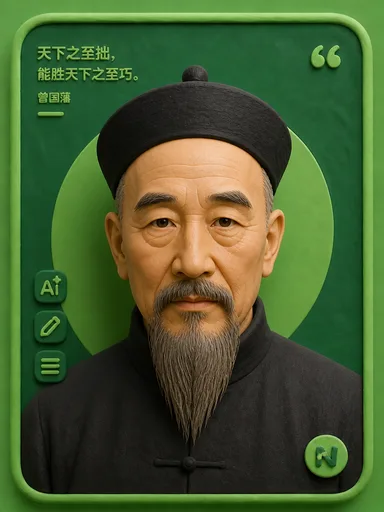
Exemplar of patient self-cultivation
Blind spots of this viewpoint
Extreme self-discipline has a high bar for ordinary people; a hierarchical, obedience-heavy view of organization is distant from flat modern teams; the patient approach can miss windows in fast-iterating industries.
Should I quit and start a company?
First work out whether you can survive the worst outcome. Do not stare only at the probability of success.
If the product does not excite you, do not start.
First make yourself invincible, then wait for the enemy's opening. Consider defeat before victory.
Screenshot pendingpublic/shots/viewpoint-roundtable.webpFree, Lite and Pro have exactly the same features. They differ only in how many credits arrive each period. Capturing a note is free and costs nothing.
¥0
free forever
500 credits on signup
one-time · never expires · no refill
¥8
per month · or ¥98 / year
1,000 credits per period
auto-granted monthly · valid that month
¥18
per month · or ¥198 / year
2,500 credits per period
auto-granted monthly · valid that month
¥8–¥168
7 tiers
800–16,800 credits
one purchase · never expires
¥1 = 100 credits. These are the real costs, all visible inside the app.
Only AI generation spends credits. Capturing is always free.
All three expect you to build the structure and maintain the taxonomy. Sorp's knowledge base is maintained solely by the AI and is read-only: you only record, while structure, filing, linking and summaries are done for you. If you enjoy hand-building a second brain, Sorp is not for you. If you are tired of maintaining it, Sorp is.
Yes. The knowledge base is not sealed: the Agent is your one write channel, and every write produces a card with a before-and-after snapshot that you can revert individually. You can also just tell the AI what to change and have it rewrite.
No — this rule is hard-coded. Content from news, WeChat articles, insight pieces and viewpoint sessions is never silently written into your knowledge base; it only persists if you explicitly confirm it. The reason: a verbatim-accurate quotation can pass every factual check yet read as your own belief — that is a misattribution of authorship.
On Alibaba Cloud (object storage and database). Speech-to-text and image understanding are provided by Alibaba Cloud Bailian, the large model by DeepSeek, and one-tap phone login by Alibaba Cloud PNVS. In settings you can inspect and clear the knowledge base, clear local cache, sign out, or unbind WeChat.
Yes — recording and settling are separate. Creating a note costs no credits and triggers no organizing task. Each day the AI places a few inspiration cards in your domain (at most 5 per domain per day), and you decide what is worth keeping.
Recording is free. Credits are spent on AI generation: 10 for an insight article (15 for life-record types), 10 for a single-viewpoint analysis, 5 per speaker for a roundtable, and 6 per minute for live voice calls (capped at 10 minutes, with the difference refunded on hang-up). Every tier has identical features — only the credit allowance differs. Failed AI tasks are automatically refunded.
The iOS release is working its way through App Store review. Until it lands, scan to register for the beta.
 Scan to join the beta · iOS